What is Chan Buddhism? Origin, Philosophy & Practice Guide
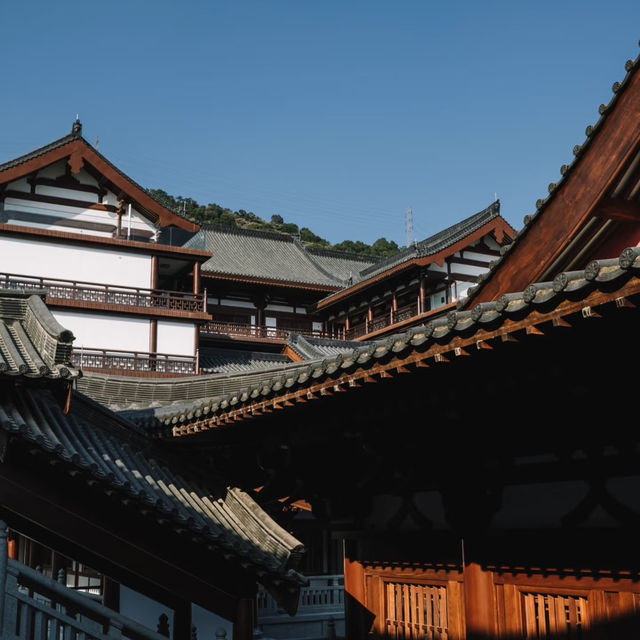
"
A comprehensive introduction to China's original meditation tradition—the source of Japanese Zen
You've probably heard of Zen Buddhism. But did you know that Zen is actually the Japanese pronunciation of "Chan" (禅)—a tradition that originated in China well over a thousand years ago?
Chan Buddhism is not a branch of Zen. It's the source.
While Zen has become famous in the West through Japanese teachers and popular culture, Chan remains the original Chinese tradition from which all East Asian meditation schools emerged. Understanding Chan means understanding the roots of one of the world's most influential spiritual traditions.
In this guide, you'll learn what Chan Buddhism actually is, where it came from, what it teaches, and how you can begin practicing it today.
What is Chan Buddhism? The Basics
Chan (禅) comes from the Sanskrit word dhyāna, meaning "meditation" or "meditative absorption." It's a school of Mahayana Buddhism that developed in China beginning around the 6th century CE.
But Chan isn't simply "Chinese meditation." What makes Chan distinctive is its approach:
- Direct insight over scripture study: While other Buddhist schools emphasize textual learning, Chan focuses on directly perceiving your own mind
- Transmission outside words: The essential teaching passes from teacher to student through direct experience, not just through books
- Integration with daily life: Enlightenment isn't separate from ordinary activities—chopping wood and carrying water can be spiritual practice
- Sudden awakening: Rather than gradual progress over lifetimes, Chan teaches that awakening can happen in any moment
A famous Chan saying captures this spirit:
"A special transmission outside the scriptures;
Not dependent on words and letters;
Directly pointing to the human mind;
Seeing one's nature and becoming Buddha."
This doesn't mean Chan rejects Buddhist teachings. Rather, it emphasizes that intellectual understanding alone isn't enough. You must see your true nature directly.
The Origins: How Chan Buddhism Began
Bodhidharma: The First Patriarch
According to tradition, Chan was brought to China by Bodhidharma (菩提达摩), an Indian or Central Asian monk who arrived sometime in the 5th or 6th century CE.
Historical records about Bodhidharma are scarce, and his biography is layered with legend. What we know comes primarily from texts written decades or centuries after his life. The earliest mention appears in The Record of the Buddhist Monasteries of Luoyang (547 CE), which describes a foreign monk from the Western Regions who visited Luoyang.
Later accounts tell colorful stories:
- Nine years facing a wall: Bodhidharma supposedly meditated facing a cave wall for nine years at Shaolin Monastery
- Meeting with Emperor Wu: When the emperor asked what merit he had earned through his Buddhist works, Bodhidharma reportedly answered "No merit whatsoever"—shocking the emperor but pointing to a deeper truth
- Crossing the Yangtze on a reed: A legendary depiction of his journey north
Whether these stories are historically accurate matters less than what they teach: Chan values direct experience over accumulated merit, and its founders were iconoclasts who challenged conventional religious thinking.
Bodhidharma's teachings centered on meditation and the Laṅkāvatāra Sūtra, a text emphasizing that all phenomena arise from mind. He is recognized as the First Patriarch of Chinese Chan and the 28th Patriarch in a lineage stretching back to the historical Buddha.
Huineng: The Sixth Patriarch
The most influential figure in Chan history is Huineng (慧能, 638–713 CE), the Sixth Patriarch. His life story, recorded in the Platform Sutra, became the founding narrative of the Chan tradition.
According to the text, Huineng was an illiterate woodcutter from southern China. One day, he heard someone reciting the Diamond Sutra and experienced immediate awakening. He traveled to study with the Fifth Patriarch, Hongren, who recognized his insight despite his lack of formal education.
The Platform Sutra recounts a famous poetry contest. The head monk Shenxiu wrote:
"The body is the bodhi tree,
The mind is like a bright mirror's stand.
At all times we must strive to polish it,
And must not let dust collect."
Huineng, unable to write, had someone inscribe his response:
"Bodhi originally has no tree,
The bright mirror also has no stand.
Fundamentally there is not a single thing—
Where could dust alight?"
Huineng's verse expressed a more radical understanding: there is no separate self to purify, no dust to remove. Buddha-nature is already complete.
Modern scholars note that the Platform Sutra was likely composed and revised over time, incorporating the agendas of later Chan factions. Nevertheless, its teachings became foundational for all subsequent Chan schools, and Huineng remains revered as the pivotal figure who shaped Chan's distinctive character.
His preserved body can still be seen today at Nanhua Temple (南华寺) in Guangdong Province—over 1,300 years after his death.
Core Teachings of Chan Buddhism
1. Direct Pointing to the Mind (直指人心)
Chan emphasizes that enlightenment comes through direct insight, not intellectual understanding. A teacher "points" to the student's own mind, helping them recognize what has always been present.
This is why Chan developed unique teaching methods:
- Koans (公案): Paradoxical questions or stories that cannot be solved through logic
- Shouting and striking: Unexpected actions meant to cut through conceptual thinking
- Silence: Sometimes the deepest teaching has no words at all
The goal isn't to give students new information but to help them drop the mental constructs that obscure their original nature.
2. Sudden Enlightenment (顿悟)
While some Buddhist traditions teach a gradual path of purification over many lifetimes, Chan emphasizes that awakening can be sudden and complete.
This doesn't mean practice is unnecessary. Rather, it means:
- Enlightenment isn't something you create—it's something you recognize
- Your Buddha-nature is already fully present, not partially developed
- Any moment can be the moment of breakthrough
The analogy often used: it's not like slowly filling an empty cup. It's like suddenly realizing the cup was never empty.
3. Buddha Nature (佛性)
A central Chan teaching is that all beings already possess Buddha-nature—the capacity for awakening. You don't need to become a Buddha; you need to realize you already are one.
This teaching has profound implications:
- No one is excluded: Laypeople, not just monks, can awaken
- No special conditions required: You don't need to wait for better circumstances
- Practice reveals rather than creates: Meditation polishes the mirror to reveal what's already there
4. Ordinary Mind is the Way (平常心是道)
Perhaps Chan's most distinctive teaching is that enlightenment isn't a special state separate from everyday life.
The famous Chan master Mazu Daoyi (709–788) taught: "Ordinary mind is the Way." This means:
- Eating breakfast, walking, working—these are opportunities for awakening
- There's no need to seek exotic spiritual experiences
- The sacred is found within the mundane
This teaching revolutionized Buddhist practice. Instead of monastics retreating from the world, Chan practitioners found awakening in chopping wood, carrying water, and sweeping floors.
Chan Meditation Practices
Sitting Meditation (坐禅 Zuochan)
The foundation of Chan practice is sitting meditation. Unlike some meditation traditions that use complex visualization or mantras, Chan sitting is remarkably simple:
Basic method:
- Sit in a stable, upright posture (cross-legged on a cushion, or in a chair if needed)
- Let the breath be natural—don't control it
- Rest awareness in the present moment
- When thoughts arise, don't fight them—simply return to presence
Two main approaches developed in Chan:
Silent Illumination (默照禅): Associated with the Caodong (Soto) school, this method emphasizes simply sitting with clear awareness. No technique, no goal—just being present as you are. The practitioner allows clarity to illuminate itself.
Huatou/Koan Practice (话头/公案): Associated with the Linji (Rinzai) school, this method uses pointed questions to cut through conceptual mind. A practitioner might investigate "What is this?" or "Who is hearing?" with intense focus until a breakthrough occurs.
Koan Practice (公案)
Koans are records of dialogues between Chan masters and students, often containing paradoxical elements that cannot be resolved through logic:
- "What was your original face before your parents were born?"
- "Does a dog have Buddha-nature?"
- "What is the sound of one hand clapping?"
These aren't riddles with clever answers. Working with a koan under a teacher's guidance, the student reaches an impasse where thinking fails—and in that failure, direct insight may arise.
Walking Meditation (行禅)
Chan practice extends beyond sitting. Walking meditation brings awareness into movement:
- Slow, deliberate steps with full attention
- Coordinating movement with breath
- Often practiced between sitting periods
The principle: if enlightenment is only present during sitting, it isn't real enlightenment. True awakening permeates all activities.
Work Practice (作务)
Distinctive to Chan monasteries is the emphasis on work as spiritual practice. Baizhang Huaihai (720–814), who established the first Chan monastic code, famously said: "A day without work is a day without eating."
Cleaning, cooking, gardening, and building are not distractions from practice—they are practice. This teaching emerged partly from the Chinese cultural value of labor, and it transformed Buddhism's relationship with daily life.
The Spread of Chan Buddhism
From China, Chan spread throughout East Asia, adapting to each culture:
| Country | Name | When Established | |---------|------|-----------------| | Vietnam | Thiền | 6th century CE | | Korea | Seon | 7th–9th century CE | | Japan | Zen | 12th–13th century CE |
Chan's Golden Age
Chan flourished during the Tang (618–907) and Song (960–1279) dynasties. This period saw:
- The "Five Houses" of Chan emerging with distinct teaching styles
- Creation of major koan collections like the Blue Cliff Record and Gateless Gate
- Integration of Chan with Chinese arts, poetry, and culture
Transmission to Japan
In the 12th and 13th centuries, Japanese monks traveled to China and brought Chan back to Japan:
- Eisai (1141–1215) established the Rinzai school (from Chinese Linji)
- Dōgen (1200–1253) established the Sōtō school (from Chinese Caodong)
In Japan, Zen developed its own distinctive character, influencing tea ceremony, flower arranging, martial arts, and garden design.
Chan in the Modern World
While Zen became well-known in the West through figures like D.T. Suzuki and the Beat poets in the 1950s-60s, Chan itself has only recently gained recognition outside Asia.
Key modern Chan teachers include:
- Xuyun (虚云, 1840–1959): Revived Chan in China after periods of decline
- Sheng Yen (圣严, 1931–2009): Founder of Dharma Drum Mountain, taught extensively in the West
- Hsuan Hua (宣化, 1918–1995): Founded the City of Ten Thousand Buddhas in California
Today, Chan communities exist in North America, Europe, and throughout Asia, offering teachings in multiple languages.
Chan vs. Zen: What's the Difference?
Since Chan and Zen share the same origin, what distinguishes them?
| Aspect | Chan (Chinese) | Zen (Japanese) | |--------|----------------|----------------| | Cultural influence | Taoism: flow, naturalness | Bushido: discipline, form | | Practice style | More flexible, adaptive | Highly structured, formal | | Monastic life | Often integrated with other Buddhist schools | Distinct institutional identity | | Aesthetic | Landscape painting, poetry | Tea ceremony, rock gardens |
Neither is "more authentic" than the other—they're the same tradition expressed through different cultural lenses. For a deeper exploration, see our article Chan vs. Zen Buddhism: Understanding the Key Differences.
How to Experience Chan Buddhism Today
Start a Daily Practice
You don't need to travel to a monastery to begin practicing Chan. Start simply:
- Set aside 10–20 minutes daily for sitting meditation
- Find a quiet space where you won't be disturbed
- Sit comfortably but alert—spine upright, body relaxed
- Let thoughts come and go without following them
- When you notice you've drifted, gently return to presence
Consistency matters more than duration. Ten minutes daily is more valuable than an hour once a week.
Find a Teacher
Chan has always emphasized the teacher-student relationship. A qualified teacher can:
- Correct misunderstandings that arise in practice
- Offer personalized guidance based on your experience
- Transmit teachings that can't be conveyed through books alone
Look for teachers in established lineages, such as Dharma Drum Mountain, or local Chan/Zen centers.
Attend a Retreat
The deepest way to experience Chan is through intensive practice. Retreats offer:
- Extended meditation periods
- Guidance from experienced teachers
- Freedom from daily distractions
- A supportive community of practitioners
Retreat formats range from weekend introductions to traditional seven-day Chan retreats (禅七).
Experience Authentic Chan Buddhism
Reading about Chan is valuable, but the tradition ultimately points beyond words. As the ancient masters said, "The finger pointing at the moon is not the moon."
At Baihua Ancient Temple (百花古寺), a historic Chan monastery in Guangzhou's Zengcheng District, you can experience genuine Chan practice in a living tradition. Far from tourist crowds, this working temple offers:
- Traditional Chan retreats led by experienced monastics
- Authentic temple life—early morning practice, vegetarian meals, simple accommodation
- Deep immersion in the original Chinese meditation tradition
No yoga mats. No wellness trends. Just real practice in a genuine Buddhist setting.
Learn More About Boror Retreats →
Key Takeaways
- Chan is the original Chinese tradition that later became Zen in Japan, Seon in Korea, and Thiền in Vietnam
- It emphasizes direct insight into your own nature, rather than gradual progress through study
- Core teachings include: Buddha-nature, sudden enlightenment, and finding the sacred in ordinary life
- Main practices: sitting meditation (zuochan), koan investigation, walking meditation, and work practice
- You can start today with simple daily sitting, and deepen practice through retreats and working with a teacher
Frequently Asked Questions
Is Chan Buddhism the same as Zen?
Chan is the Chinese origin; Zen is the Japanese development. They share the same root tradition but have evolved differently in their respective cultures. All Zen schools trace their lineage back to Chinese Chan.
Do I need to be Buddhist to practice Chan meditation?
No. Chan meditation can benefit anyone regardless of religious background. Many practitioners appreciate Chan's emphasis on direct experience rather than belief.
How is Chan different from other forms of meditation?
Chan emphasizes seeing your true nature rather than achieving special states. It's less about developing particular qualities and more about recognizing what's already present.
Is enlightenment really possible in this lifetime?
Chan teaches that awakening is available in any moment—because your Buddha-nature is already complete. The question isn't whether it's possible, but whether you're willing to look directly.
What's the best way to start?
Begin with daily sitting meditation, even just 10 minutes. Read foundational texts like the Platform Sutra. When possible, attend a retreat or find a teacher who can guide you personally.
Further Reading
- Chan vs Zen Buddhism: Understanding the Key Differences
- 15 Best Chan Buddhism Books for Beginners
- Temple Stay Guide: What to Expect
- Silent Meditation Retreat: Complete Preparation Guide
Last updated: January 2025