Chan vs Zen Buddhism: Understanding the Key Differences
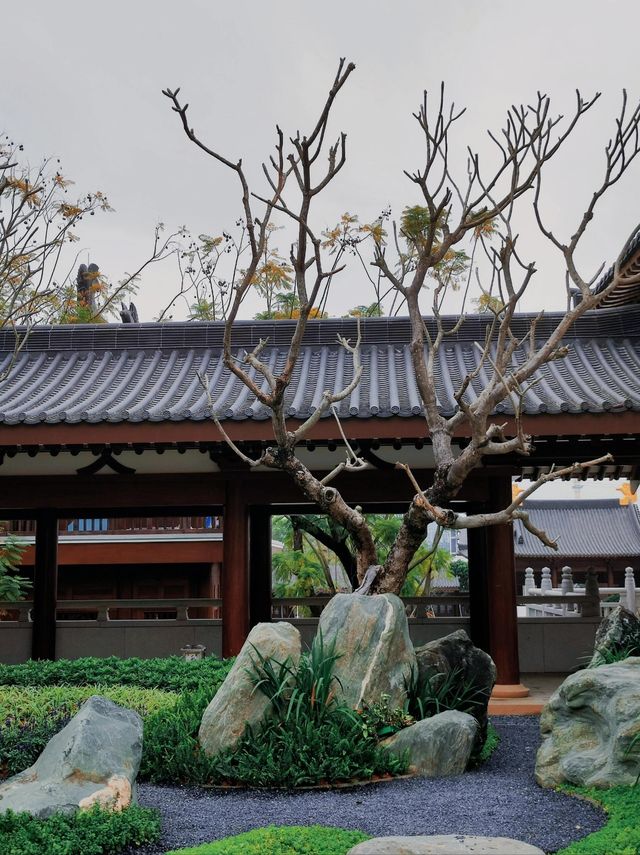
"
Same tradition, different expressions—how Chinese Chan and Japanese Zen compare
"What's the difference between Chan and Zen?"
It's one of the most common questions people ask when exploring Buddhist meditation. The short answer is simple: they're the same word, the same tradition, pronounced differently in Chinese and Japanese.
But the longer answer reveals something more interesting. Over centuries of development in different cultures, Chan and Zen have taken on distinct flavors—different aesthetic sensibilities, practice styles, and ways of expressing the same fundamental insights.
Understanding these differences can help you find the approach that resonates with you. And appreciating what they share can deepen your understanding of the tradition as a whole.
The Same River, Different Names
Let's start with etymology:
| Language | Word | Character | Meaning | |----------|------|-----------|---------| | Sanskrit | Dhyāna | ध्यान | Meditation, meditative absorption | | Chinese | Chán | 禅 | Same meaning, Chinese transliteration | | Japanese | Zen | 禅 | Same character, Japanese pronunciation | | Korean | Seon | 선/禪 | Same character, Korean pronunciation | | Vietnamese | Thiền | 禪 | Same character, Vietnamese pronunciation |
The tradition traveled from India to China (becoming Chan), then spread to Vietnam, Korea, and Japan. Each culture adopted the same Chinese character 禅 but pronounced it according to their own language.
So Chan and Zen aren't competing schools—they're the same tradition wearing different cultural clothing.
How Chan Became Zen: A Brief History
Chan Develops in China (6th–13th Century)
Chan emerged in China around the 6th century CE, traditionally dated to the arrival of Bodhidharma. Over the following centuries, it absorbed elements of Chinese culture, particularly Taoist philosophy, developing its distinctive character:
- Emphasis on naturalness and spontaneity
- Integration with poetry and landscape painting
- The emergence of unique teaching methods like koans and dharma combat
- The "Five Houses" with different teaching styles
By the Tang (618–907) and Song (960–1279) dynasties, Chan had become the dominant form of elite Buddhism in China.
Zen Arrives in Japan (12th–13th Century)
Japanese monks who traveled to China brought Chan teachings back with them:
Eisai (1141–1215) studied with Linji (Rinzai) masters in China and established the Rinzai school in Japan. This lineage emphasizes:
- Koan practice—working with paradoxical questions
- Dynamic interaction between teacher and student
- The possibility of sudden breakthrough
Dōgen (1200–1253) trained with Caodong (Soto) teachers and founded the Sōtō school. This lineage emphasizes:
- Shikantaza ("just sitting")—sitting without technique or goal
- Detailed attention to daily activities
- The unity of practice and enlightenment
Divergent Paths
After transmission to Japan, Chan and Zen developed along different trajectories:
In China, Chan continued to evolve and often merged with other Buddhist schools, particularly Pure Land Buddhism. The distinction between "Chan school" and "Pure Land school" became less rigid than in Japan.
In Japan, Zen maintained a distinct institutional identity. Rinzai and Sōtō became separate sects with their own hierarchies, training systems, and temple networks. This organizational clarity helped preserve specific practices but also created more formal structures.
Key Differences Between Chan and Zen
1. Cultural Flavor
The most noticeable difference between Chan and Zen is their cultural atmosphere.
Chan reflects Chinese culture:
- Influenced by Taoism, with its emphasis on naturalness (自然 zìrán) and non-forcing (无为 wúwéi)
- Connected to the literati tradition of poetry and painting
- More willing to adapt and synthesize with other approaches
- Often described as "earthy" or "poetic"
Zen reflects Japanese culture:
- Influenced by Bushido, the way of the warrior, with its emphasis on discipline
- Connected to Japanese aesthetic traditions like tea ceremony and flower arranging
- More preservation of specific forms and rituals
- Often described as "refined" or "precise"
A common metaphor: Chan is like a dirt path through mountains—organic, winding, connected to nature. Zen is like a carefully raked rock garden—elegant, structured, every stone deliberately placed.
2. Practice Style
While both traditions use sitting meditation as their foundation, the atmosphere differs:
A Chan retreat might include:
- Flexible schedule with periods for walking in nature
- Dharma talks that incorporate poetry and stories
- Tea shared informally with the teacher
- Integration of chanting and other practices
- Warm, familial atmosphere
A Zen sesshin (intensive retreat) typically involves:
- Highly structured schedule from early morning
- Long sitting periods with minimal movement
- Formal meals eaten in meditation (oryoki)
- Brief, focused interviews with the teacher (dokusan/sanzen)
- Intense, concentrated atmosphere
Neither approach is superior—they serve different temperaments and purposes.
3. Relationship to Other Buddhist Schools
In Chinese Buddhism, the boundaries between schools are more fluid:
- Many temples practice both Chan meditation and Pure Land chanting (nianfo)
- Teachers often draw from Huayan, Tiantai, and other philosophical traditions
- The term "Chan" sometimes refers broadly to Chinese Buddhism rather than a specific sect
In Japanese Buddhism, schools are more institutionally distinct:
- Zen temples are clearly separate from Pure Land, Shingon, or Tendai temples
- Rinzai and Sōtō maintain their own training systems
- Cross-training between schools is less common
4. Aesthetic Expression
Both traditions have influenced art, but in characteristically different ways:
Chan arts in China:
- Landscape painting (山水画 shānshuǐhuà)—vast mountains, tiny human figures, suggesting the immensity of nature
- Poetry, particularly Tang dynasty verse
- Calligraphy that emphasizes spontaneous expression
- The aesthetic of uncarved wood and natural forms
Zen arts in Japan:
- Tea ceremony (茶道 sadō/chadō)—formal ritual elevating everyday action to spiritual practice
- Flower arranging (花道 kadō)—simplicity and asymmetry
- Rock gardens (枯山水 karesansui)—raked gravel suggesting water, rocks suggesting mountains
- The aesthetic of wabi-sabi—beauty in imperfection, impermanence, and incompleteness
5. Language and Texts
Both traditions share classical Chan texts like the Platform Sutra, Blue Cliff Record, and Gateless Gate. However:
Chinese Chan continues to use classical Chinese and has added later Chinese commentaries and teachings.
Japanese Zen has developed its own literature in Japanese, including important texts by Dōgen (Shōbōgenzō) and collections of Japanese koans.
For Western practitioners, this means that studying Zen often involves engaging with Japanese terms (zazen, sesshin, dokusan) while studying Chan involves Chinese terms (zuochan, chan qi, xiaocan).
Comparing Practice Traditions
Meditation Instructions
Chan approach (particularly Silent Illumination):
- Sit with no technique
- Allow awareness to be bright and clear
- Don't grasp or reject anything
- "Silently illuminate"—rest in clarity without manipulation
Zen approach (particularly Shikantaza in Sōtō):
- "Just sit" with wholehearted presence
- Detailed attention to posture—chin tucked, ears over shoulders
- Eyes half-open, gaze lowered
- Think "not-thinking"—aware but not caught in thought
Zen approach (Rinzai koan practice):
- Receive a koan from the teacher
- Investigate it with total focus
- "Become one with" the koan until breakthrough
- Present your understanding in formal interview
The actual practices are quite similar—the differences are often in emphasis and framing rather than substance.
Teacher-Student Relationship
In Chan, the relationship tends to be:
- Warm and familial
- Teacher as "Dharma friend" as much as authority
- Flexible structure for meetings
- Guidance through conversation and example
In Zen, the relationship is often:
- More formal and hierarchical
- Clear protocols for interaction
- Structured interview format (dokusan/sanzen)
- Guidance through ritual and challenge
Again, there's enormous variation within each tradition. Some Zen teachers are informal; some Chan teachers are strict. These are tendencies, not rules.
Monastic Training
Chinese Chan monasteries traditionally:
- Integrate Chan with other practices (chanting, sutra study)
- Follow the "Baizhang Code" established in the 8th century
- Emphasize work practice (作务 zuòwù)
- Host both monks/nuns and laypeople for retreats
Japanese Zen monasteries traditionally:
- Focus specifically on Zen training
- Follow detailed regulations for each school
- Emphasize formal ritualized practice
- Often require several years of residential training for monks
Modern Practice: Chan and Zen in the West
How They Arrived
Zen came to the West first, primarily through:
- D.T. Suzuki's writings (early 20th century)
- Japanese teachers after World War II
- The Beat poets and counterculture (1950s-60s)
- Established centers like San Francisco Zen Center, Rochester Zen Center
Chan arrived later, primarily through:
- Master Hsuan Hua (宣化) in San Francisco (1960s)
- Master Sheng Yen (圣严) and Dharma Drum Mountain (1970s onward)
- Growing interest in original Chinese sources
Today, both are available in the West, though Zen remains more widely known.
Which is More "Authentic"?
Neither. Both are authentic expressions of the tradition in their respective cultures. The question is which resonates with you:
You might prefer Chan if you:
- Appreciate flexibility and naturalness
- Enjoy poetry and philosophical discussion
- Want practice integrated with daily life
- Feel drawn to Chinese culture and aesthetics
- Prefer a less formal atmosphere
You might prefer Zen if you:
- Thrive with structure and discipline
- Value precise forms and rituals
- Want intensive, focused retreat practice
- Feel drawn to Japanese culture and aesthetics
- Prefer clear expectations and protocols
The Best Approach
Try both if you can.
Many Western practitioners appreciate elements of both traditions. A teacher trained in Japanese Zen might have a style that feels more like Chan, and vice versa. Focus on finding a good teacher and a practice that works for you, rather than worrying about labels.
The traditions themselves have always cross-pollinated. Modern Japanese Zen teachers have studied Chinese sources; modern Chan teachers have learned from Japanese developments. The walls between them are more permeable than formal categories suggest.
What They Share
Despite their differences, Chan and Zen agree on what matters most:
Shared Core Teachings
- Buddha-nature: All beings have the capacity for awakening
- Direct insight: Enlightenment comes through seeing, not just studying
- Mind-to-mind transmission: The essence passes from teacher to student
- Present moment: Awakening is available here and now
- Ordinary life as practice: Not separate from daily activities
Shared Practices
- Sitting meditation as foundation
- Working with teachers
- Retreat practice for deepening
- Integration of mindfulness into daily life
- Study of classical texts
Shared Goal
Both Chan and Zen aim at the same thing: direct realization of your true nature. The methods differ; the destination is the same.
Experience the Original Tradition
Reading about Chan and Zen provides understanding, but the traditions themselves point beyond words. The best way to appreciate either is through direct experience.
At Baihua Ancient Temple (百花古寺) in Guangzhou, you can experience Chan Buddhism in its original Chinese context—not a Japanese adaptation, not a Western interpretation, but the source tradition itself.
What makes this different:
- Authentic lineage: Genuine transmission in the Chan tradition
- Chinese setting: Practice where Chan developed
- Living temple: Not a retreat center, but a functioning monastery
- No tourism: Far from the crowds, focused on practice
Discover Boror Chan Retreats →
Key Takeaways
- Chan and Zen are the same tradition expressed through Chinese and Japanese cultures
- Chan tends toward flexibility, naturalness, and integration with other practices
- Zen tends toward structure, formality, and distinct institutional identity
- Neither is more authentic—both preserve genuine teachings
- Choose based on temperament: Which atmosphere resonates with you?
- The goal is the same: Direct realization of your true nature
Frequently Asked Questions
Which is older, Chan or Zen?
Chan is older. It developed in China from the 6th century CE. Zen arrived in Japan in the 12th–13th century, about 600 years later.
Can I practice both?
Absolutely. Many practitioners draw from both traditions. Some study with Japanese Zen teachers while also exploring Chinese Chan texts and methods.
Is one more "pure" or "original"?
Both have evolved from their origins. Chan has changed over centuries in China; Zen has developed its own innovations in Japan. Neither is a perfect preservation of the earliest tradition—nor would that be desirable. Living traditions grow and adapt.
Which is better for beginners?
Neither is inherently easier. Some beginners appreciate Zen's clear structure; others prefer Chan's flexibility. Try an introductory workshop or retreat in each if possible.
Are the meditation techniques different?
The core practice—sitting in awareness—is essentially the same. Differences emerge in emphasis, ritual context, and the style of teacher interaction. The actual experience of meditation is remarkably similar.
Related Articles
- What is Chan Buddhism? Complete Guide
- 15 Best Chan Buddhism Books for Beginners
- Silent Meditation Retreat: What to Expect
Last updated: January 2025